
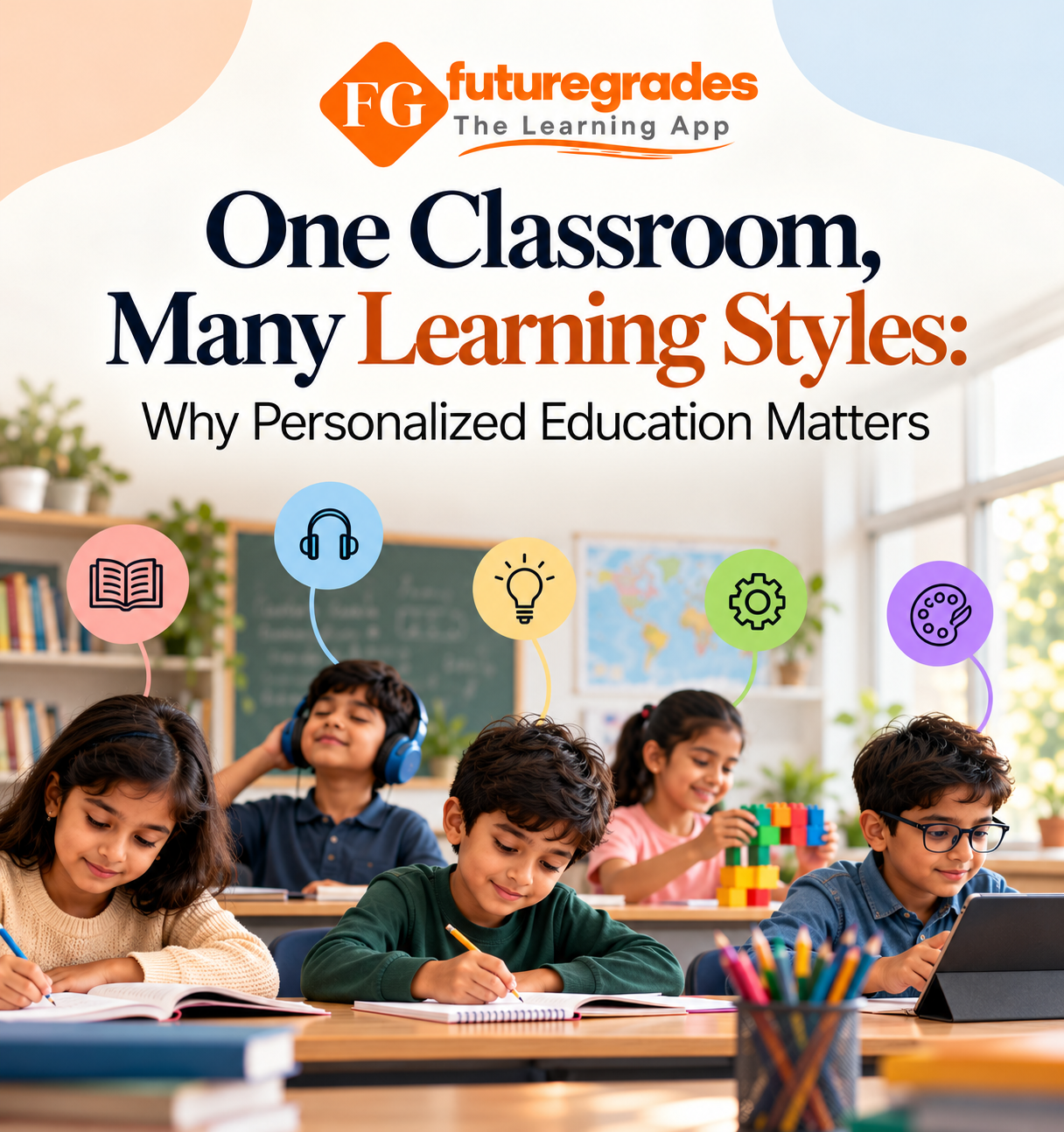
Imagine a classroom where thirty students sit together, listen to the same teacher, and study the same lesson. While some students understand the concept immediately, others need more examples, visual explanations, or extra time to grasp the same topic.
The teacher is teaching one lesson, but every student is learning differently.
This is one of the biggest challenges in modern education. Every student has unique strengths, interests, learning preferences, and academic needs. Yet, traditional education often follows a one-size-fits-all approach. This is why personalized education is becoming increasingly important.
Every Student Learns Differently
No two students are exactly alike. Some understand complex concepts through practical examples, while others benefit from diagrams, videos, discussions, or step-by-step explanations.
For example, when learning mathematics, one student might understand a formula by reading it in a textbook. Another might need a solved example, while someone else may require additional practice questions before feeling confident.
Similarly, a student studying science may understand a concept better through a visual demonstration than through a lengthy explanation.
The problem is not always that students cannot learn. Sometimes, they simply need an explanation that makes sense to them.
Recognizing these differences is the first step toward building a more effective and inclusive learning environment.
The Limitations of One-Size-Fits-All Education
Traditional classrooms play an essential role in education, but managing the individual needs of every student can be challenging.
Teachers often work within fixed schedules, prescribed syllabuses, and examination deadlines. With many students in a single classroom, providing individual attention to everyone is not always possible.
As a result, some students may struggle with foundational concepts, while others may feel unchallenged because they are ready to move ahead.
Over time, these differences can affect students' confidence, participation, and interest in learning.
A student who hesitates to ask questions in class may continue carrying the same doubt home. If that doubt remains unresolved, it can make the next lesson even more difficult to understand.
Education should not simply focus on completing the syllabus. It should also ensure that students understand what they are learning.
What Is Personalized Education?
Personalized education is an approach that adapts learning experiences to the individual needs, pace, goals, and progress of each student.
Instead of expecting every student to follow exactly the same path, it provides flexibility in how students access information, practise concepts, receive feedback, and overcome difficulties.
Personalized learning can include:
- Explanations adapted to a student's current level of understanding.
- Additional practice for topics that require more attention.
- Advanced challenges for students who are ready to progress.
- Visual aids, examples, and interactive learning resources.
- Flexible opportunities to ask questions and revisit difficult concepts.
- Feedback that helps students understand their mistakes and improve.
The goal is not to create a separate classroom for every learner. It is to make learning more responsive to the needs of every individual within the educational system.
How Technology Is Transforming Personalized Learning
Technology is opening new possibilities for personalized education. Digital learning platforms, adaptive assessments, and artificial intelligence are helping students access academic support beyond the limitations of a traditional classroom.
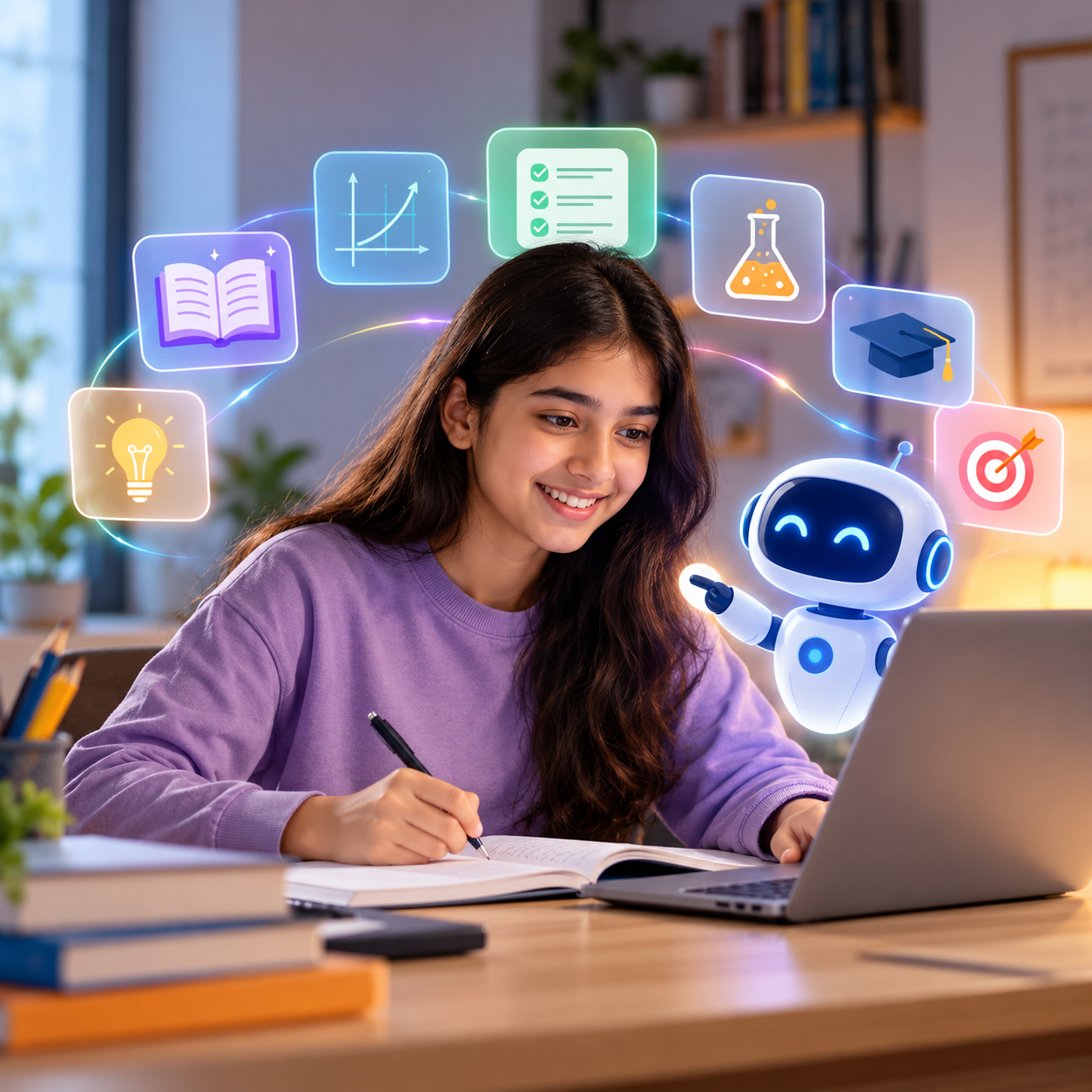
AI-powered learning tools can help explain difficult concepts in simpler language, provide step-by-step guidance, generate practice questions, and allow students to explore a topic through follow-up questions.
Consider a student preparing for an examination late at night. They encounter a difficult physics problem but cannot immediately reach their teacher. Instead of leaving the doubt unresolved, they can use an AI-powered learning platform to explore the concept, review the steps, and practise similar questions.
This flexibility can make learning more accessible and convenient.
However, technology should support teachers rather than replace them. Teachers provide mentorship, emotional understanding, classroom interaction, and the human connection that remains central to education. The strongest learning environments combine effective teaching with useful technology.
Why Personalized Education Matters for Students
- It Builds Confidence
When students receive explanations that address their difficulties, they are more likely to understand concepts and participate actively. Small improvements can gradually build confidence and encourage them to take on more challenging topics.
- It Encourages Independent Learning
Personalized learning helps students recognize their strengths and weaknesses. They can identify what they need to practise, ask questions, and take greater responsibility for their progress.
- It Supports Different Learning Paces
Some students need more time to master a concept, while others are ready to move forward quickly. Personalized education allows learners to revisit difficult topics or explore advanced material without making learning unnecessarily stressful.
- It Makes Learning More Engaging
Relevant examples, interactive explanations, and practical applications can make difficult subjects easier to approach. When students understand how a concept connects to real life, learning becomes more meaningful.
- It Helps Address Learning Gaps
Early identification of misunderstandings allows students to strengthen foundational knowledge before moving to more advanced topics. This is especially important in subjects where each new concept builds on previous learning.
The Role of AI in the Classroom of Tomorrow
Artificial intelligence is creating opportunities to make personalized support available to more students.
Imagine a learning environment where students can ask questions without feeling embarrassed, revisit explanations whenever necessary, and receive support based on their individual doubts.
An AI learning companion can help students explore questions at any time, including late at night when traditional academic support may not be available. It can also encourage students to break complex problems into smaller, manageable steps.
Platforms such as Future Grades reflect this emerging approach to education by offering AI-powered doubt-solving and personalized learning support around the clock.
Such tools can complement classroom teaching by helping students practise independently, clarify concepts, and prepare more confidently for examinations.
At the same time, AI-generated explanations should be checked for accuracy, and students should be encouraged to understand the reasoning behind an answer rather than simply copy the final result. Privacy, responsible technology use, and age-appropriate guidance are equally important.
The purpose of educational AI should be to strengthen understanding, not merely to provide quick answers.
Creating a Classroom Where Every Student Matters
Personalized education does not mean abandoning traditional classrooms. It means making them more inclusive, flexible, and responsive.
Teachers can introduce differentiated activities, encourage questions, use regular assessments to identify learning gaps, and offer students different ways to demonstrate understanding.
Schools can combine these practices with digital resources that provide additional support outside class hours. Parents can also help by encouraging curiosity, celebrating progress, and understanding that academic growth looks different for every child.
Most importantly, educators must recognize that struggling with a subject does not define a student's potential. With appropriate guidance, time, and support, students can develop the skills and confidence they need to succeed.
Conclusion: One Classroom, Many Possibilities
A classroom may have one teacher, one timetable, and one syllabus, but it contains many different learners, each with unique aspirations and challenges.
The future of education lies in recognizing these differences and responding to them thoughtfully. Personalized education can help make learning more accessible, engaging, and meaningful by giving students the support they need to move forward.
When education adapts to learners, students gain more than academic knowledge. They develop confidence, curiosity, independence, and a stronger belief in their own abilities.
Because the real purpose of education is not to make every student learn in the same way. It is to help every student discover the best way to learn.
One classroom. Many learning styles. One shared goal: helping every learner reach their potential.
Written by FutureGrades Publisher
Verified Educatorpublisher
Dedicated educator contributing to FutureGrades' mission of making high-quality, personalized competitive exam preparation accessible to every Indian student.